The Alchemy Ecosystem
Consider how reflection, relationships, and practice work together in the learning environment.
In practice: Map the people, routines, and resources that support a practice you want to build.
About LIT · The method
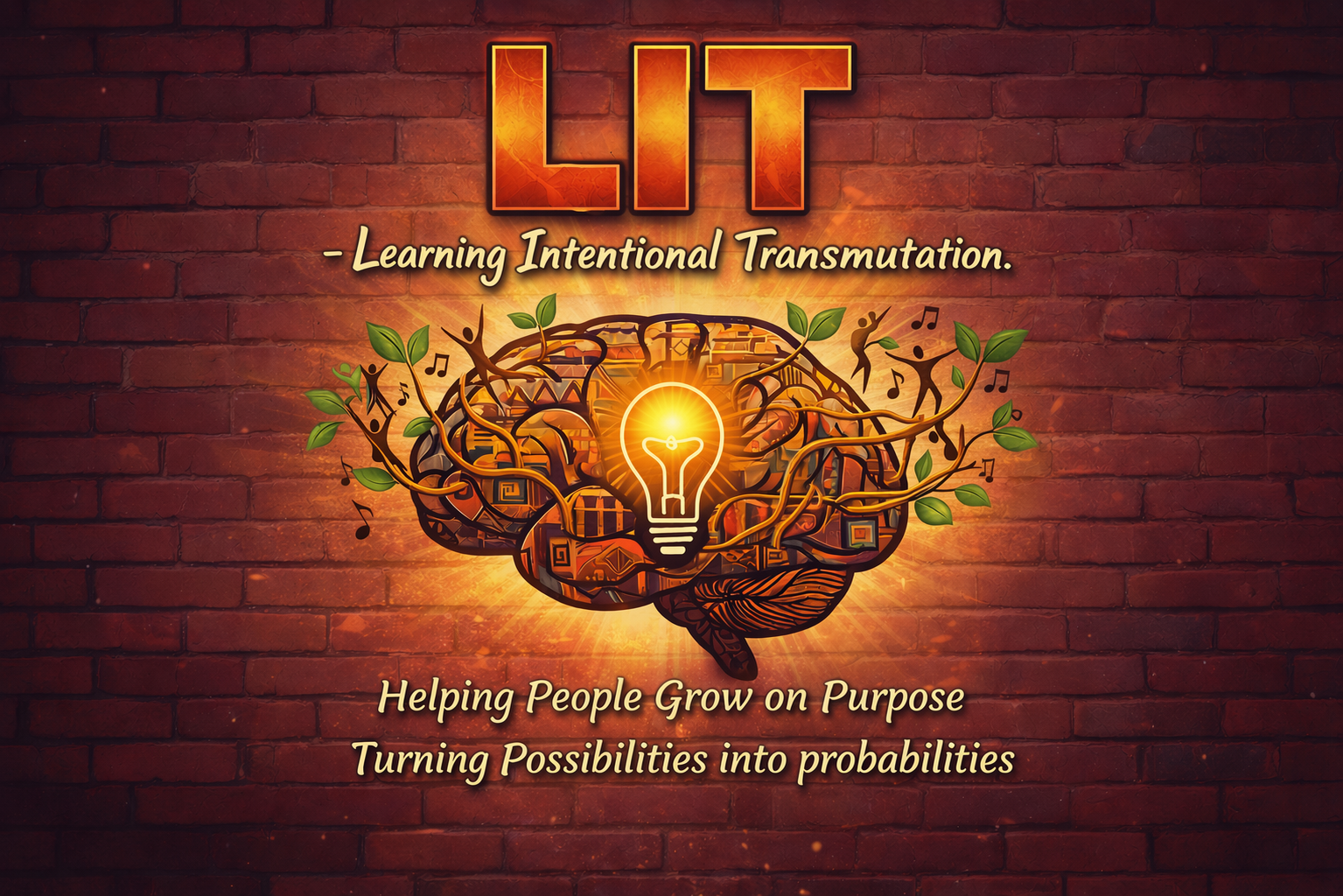
LIT Academy stands for Learning Intentional Transmutation. The seed model below is a metaphor for how that learning works in real life. It doesn't replace the name.
L
Choose an intention and plant it on purpose. Name what you want to understand, practice or become.
Try it: Write one sentence: “I am planting…”
I
Return to it through repeated, deliberate practice. Small actions repeated over time give the seed what it needs.
Try it: Pick one small action you can repeat this week.
T
Transmutation happens through ongoing application. Notice what changes, adjust, and keep supporting it in real life.
Try it: After a week, ask: what grew, and what needs support?
The seed model is a practical way to picture Learning Intentional Transmutation. Inside each stage, a smaller cycle repeats: Reflect → Learn → Practice → Apply.
Signature frameworks
Consider how reflection, relationships, and practice work together in the learning environment.
In practice: Map the people, routines, and resources that support a practice you want to build.
Give passing insights a place to become something you can revisit and use.
In practice: Capture an idea after an activity, then choose one small action to explore it.
Work backward from a possibility to the actions and conditions it calls for.
In practice: Name a goal, identify the steps before it, and rehearse the first step.
Make observation and reflection part of an ongoing learning cycle.
In practice: Debrief an exercise: what happened, what did you notice, and what will you try next?
Examine the relationship between stated values and visible behavior.
In practice: Choose a value and describe one action that puts it into practice today.
Return to a skill deliberately rather than relying on information alone.
In practice: Repeat a communication or movement exercise, reflect, and adjust.
Explore how preparation and repeatable actions relate to what is possible.
In practice: Identify an action within your control and a way to review your consistency.
Explore leadership through the behaviors others can observe.
In practice: Model listening or shared responsibility in a group activity and reflect together.